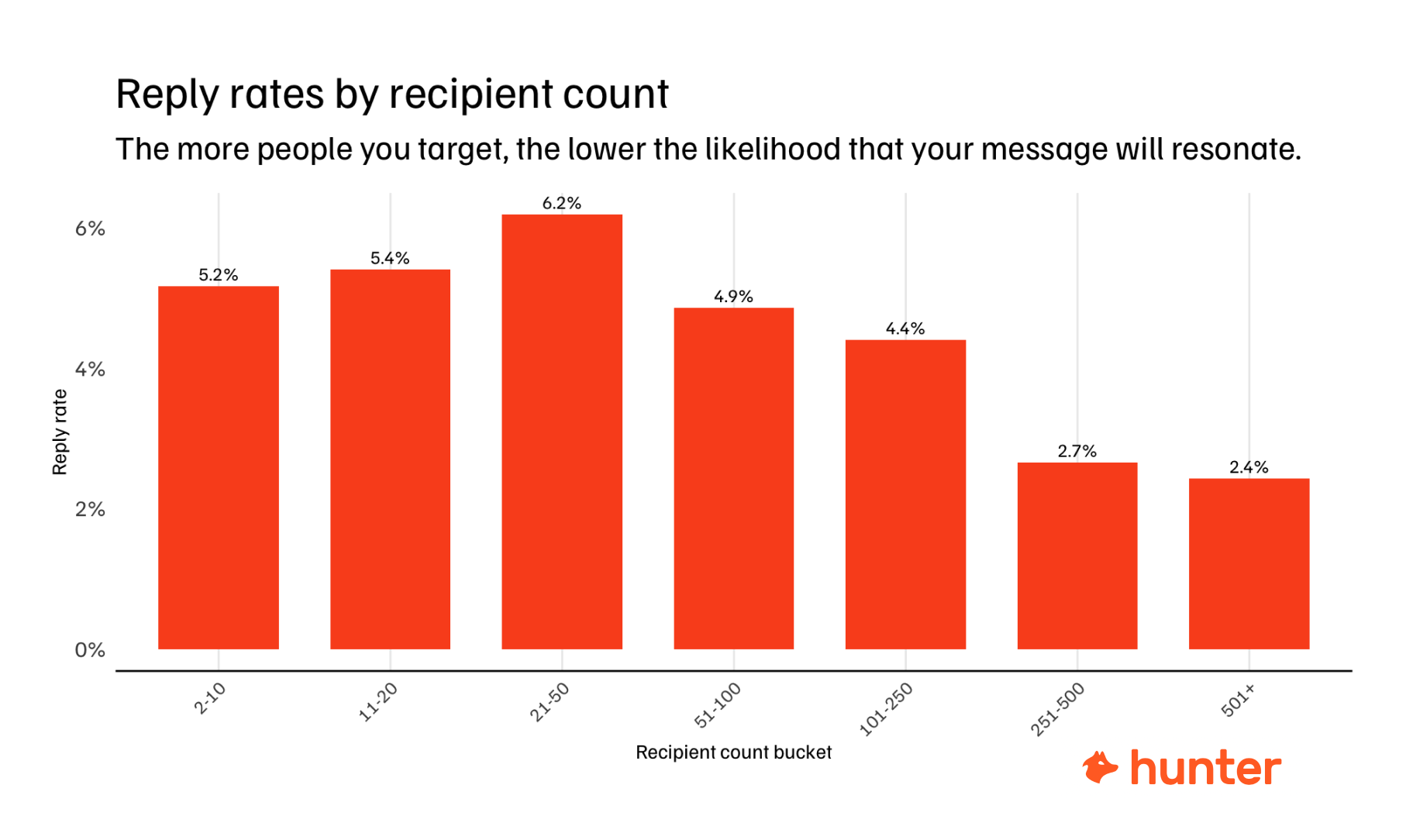
The more people are targeted with the same email sequence, the lower the average reply rate is.
It’s because sequences with fewer recipients are typically less generic, and being relevant is key to breaking through the noise inside your prospect’s mailbox.
We have hard data proving this:
- Sequences targeting 21-50 recipients average a 6.2% reply rate.
- For sequences with 501+ recipients, the average reply rate is 2.4%.
(We’re about to publish the State of Email Outreach 2026 report with these and more findings!)
But just telling you to send to smaller segments with a deeper message isn’t helpful. Because you naturally want to reach out to as many people as possible, whether a single sequence you send has 10 or 10,000 recipients.
Here’s the challenge: Knowing that targeting fewer recipients with your outreach helps stay more relevant, how can you still reach out to as many people as possible without it taking forever?
If you imagine solving this problem, it’s when you have a way to send non-generic sequences with narrow targeting… but at scale.
In this article, I will suggest an approach that lets you achieve this in Hunter.
Why list building is so important
Building an email list is not just the first step in launching an outbound sequence; it’s the most important step. When you get it wrong, the rest of the process won’t really matter.
Because if you send your pitch to the wrong person:
- It doesn’t matter if it lands in the primary inbox or not.
- It doesn’t matter if your subject line is good enough to get it opened.
Your message simply won’t resonate because, really, it’s meant for someone else.
At the same time, it doesn't make sense to reach out to 20 people and call it quits. Email outreach can be your channel for sustainable, long-term growth, and if you have a large market, then you should aim to fully penetrate it eventually.
How to strike this balance?
How to quickly build & contact small lists with Hunter
Let’s break the outreach process into three stages.
Step 1: Map out and save your market as a list of companies.
With Hunter, you don’t need to spend any money to make a potentially gigantic list of companies that belong in your addressable market.
For a quick exploration of the available data, you can look at our free TAM calculator.
Or you can run a search in Discover, which comes with more filters—and makes it easier to save the companies you find directly to Leads.
Step 2: Find ways to segment your target companies.
Surprisingly, casting a wide net first is a great way to eventually send narrowly targeted sequences.
When you have a big list of companies to target, all you need to start sending deeply relevant emails is a way to segment those companies... a feature that's built into Leads.
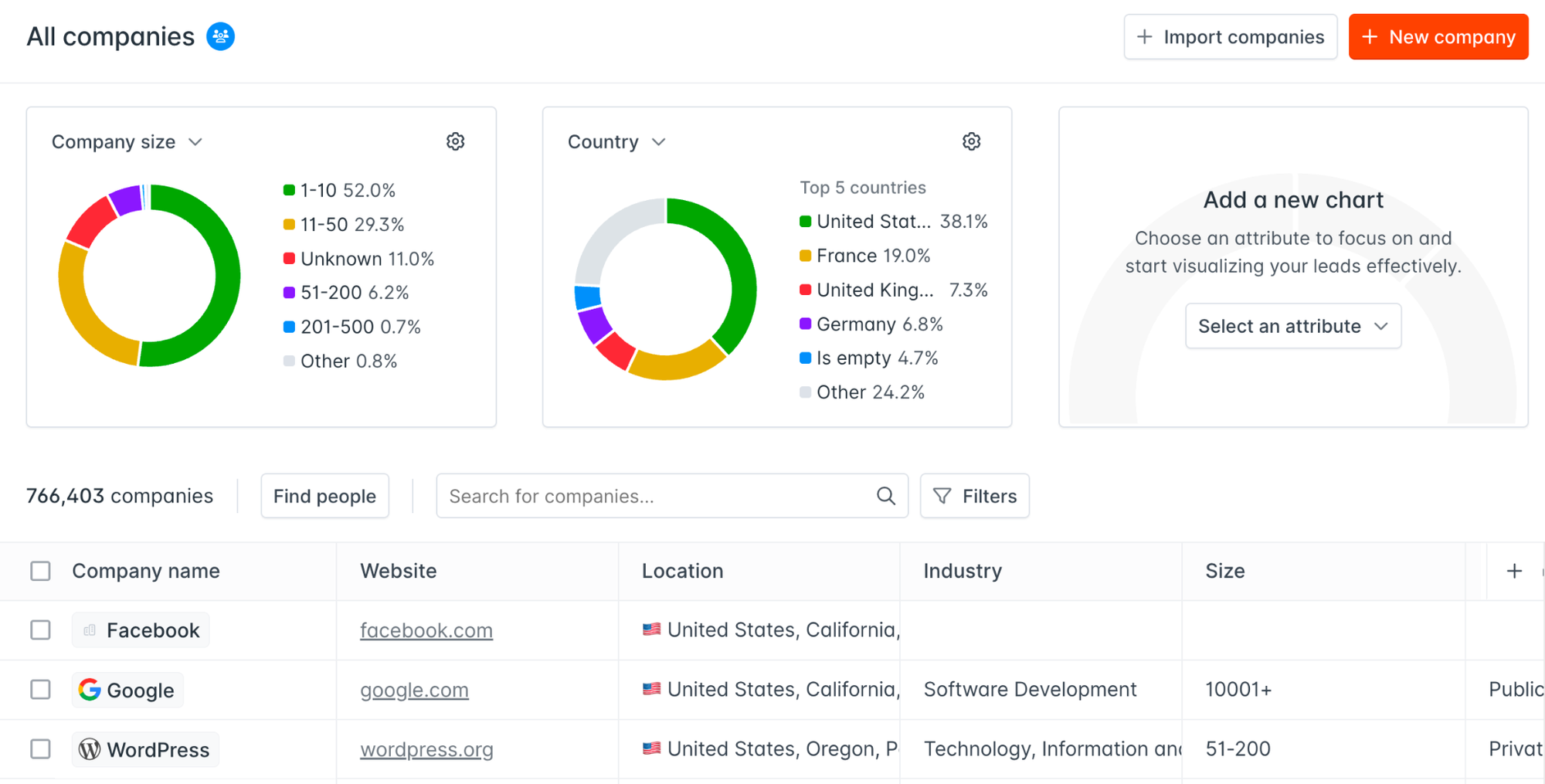
In Leads, you can segment by size, country, industry, and more.
Try the various filters and review the segments you can potentially tap into. Only when you think a given segment looks like a solid target, click “Find people” and create a people list with actual email addresses.
Step 3: Use AI Writing Assistant to draft narrow sequences.
The third stage is when you gradually engage your segments.
This is the part that can take up most of your time, because you’ll need separate sequences contextualized for each segment.
Hunter’s AI Writing Assistant can be a huge help, drafting segment-specific versions of the same sequence for you.
Here’s how to approach it:
First, take a message or a sequence that you think should perform well for your general audience.
Create a new Sequence, choose your segmented list as the target, and add your content.
Then, enable the AI Writing Assistant, let it generate your audience description, and generate content. Your message should now adapt to the specific segment you chose for this sequence.
This isn't easy enough yet
Being able to map out your total addressable market for free and save it as a tangible list removes a major headache when you're launching a new product or looking for a new market to target. But other parts of the outreach process are equally challenging.
We're working on ways to make this and other processes easier still.
In the coming months, Hunter will re-release Sequences (the part of Hunter that automates sending your emails) with the goal of helping you grow and optimize your sending.



 Send cold emails with Hunter