
TL;DR
Don't track email opens if you don't have to
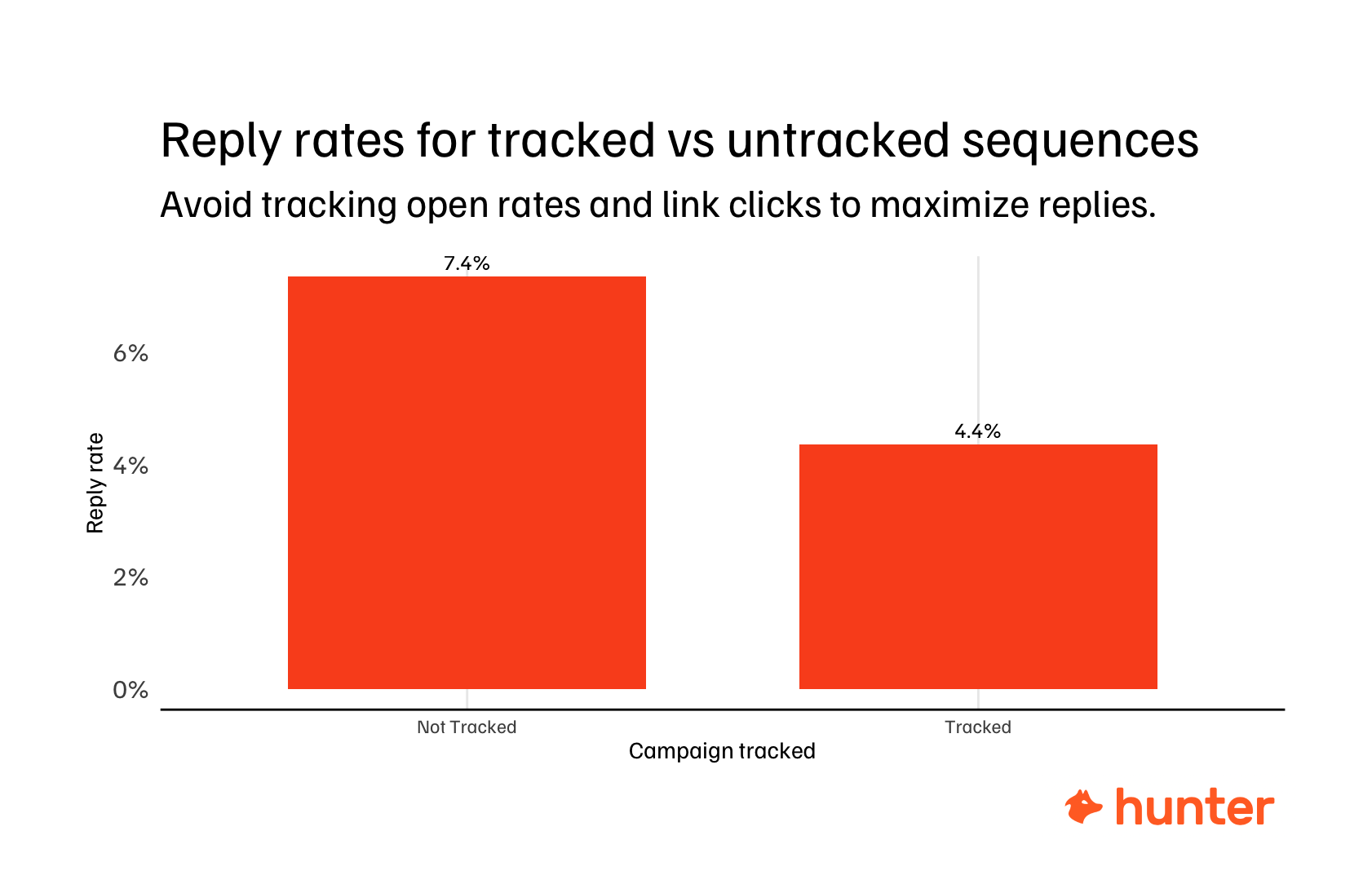
Campaigns without open tracking see a +68% higher reply rate (7.4% vs 4.4%).
Use a business email, not freemail
Sending from a custom domain delivers a +108% higher reply rate than freemail (5.2% vs 2.5%).
Target tight segments (≤50 recipients)
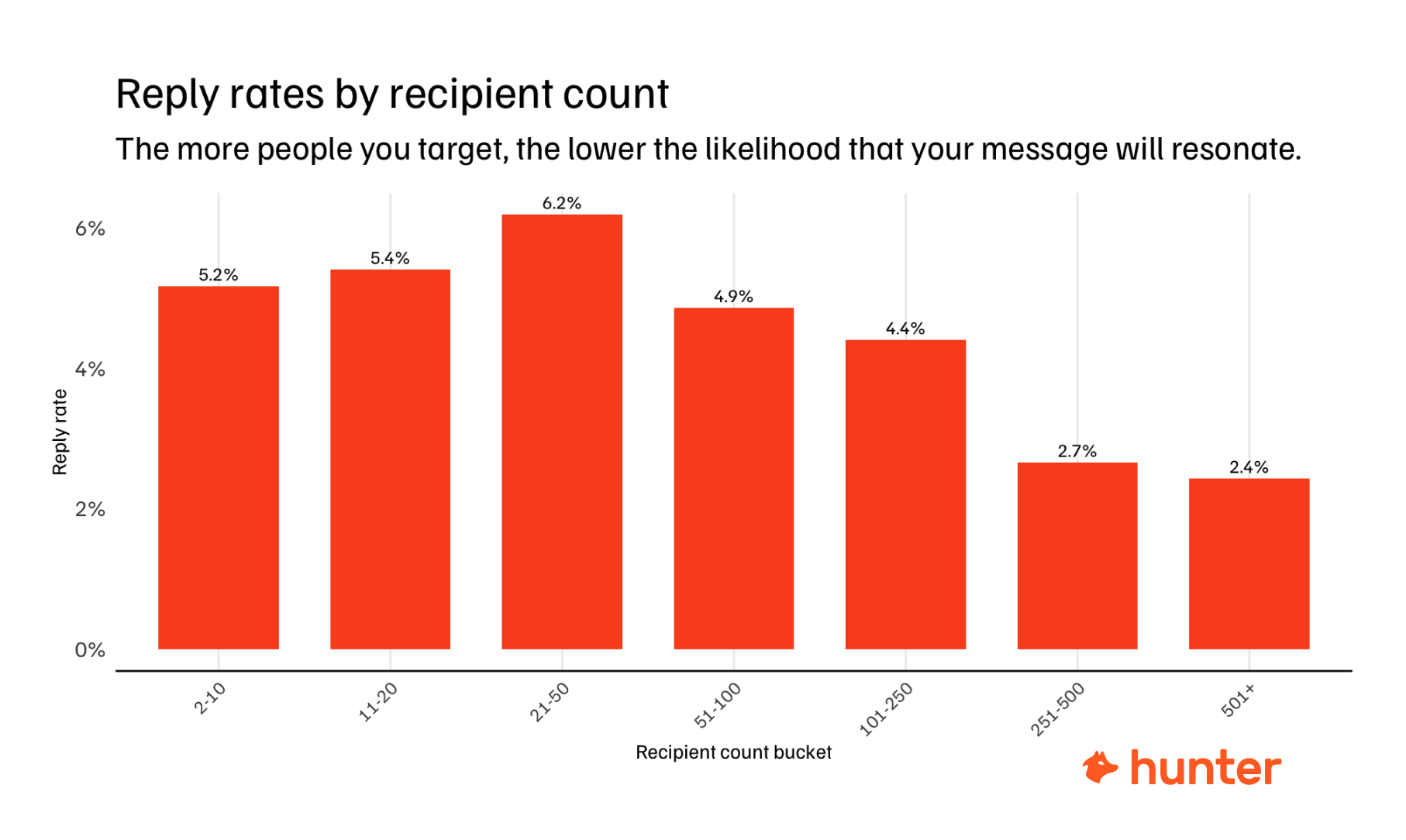
Sequences with 21–50 recipients outperform by +158% compared to 500+ recipients (6.2% vs 2.4%). This doesn't mean you can't scale beyond 50 recipients. It means that you need to segment your audience and put in the effort to have a personalized offer for each subsegment.
Limit daily sending per account
Sending 20–49 emails per day per email account achieves +27% higher reply rates than the overall average (5.7% vs 4.5%).
Email one-two people per company
Contacting one or two people per company yields a +46% higher reply rate than emailing 3+ people per company (5.1% vs 3.5%). Only proceed to alternate contacts once your main buyer persona ignores you.
Follow up—but don't go overboard
Using three messages instead of one increases total replies by +106% (6.8% vs 3.3%).
Personalize your message
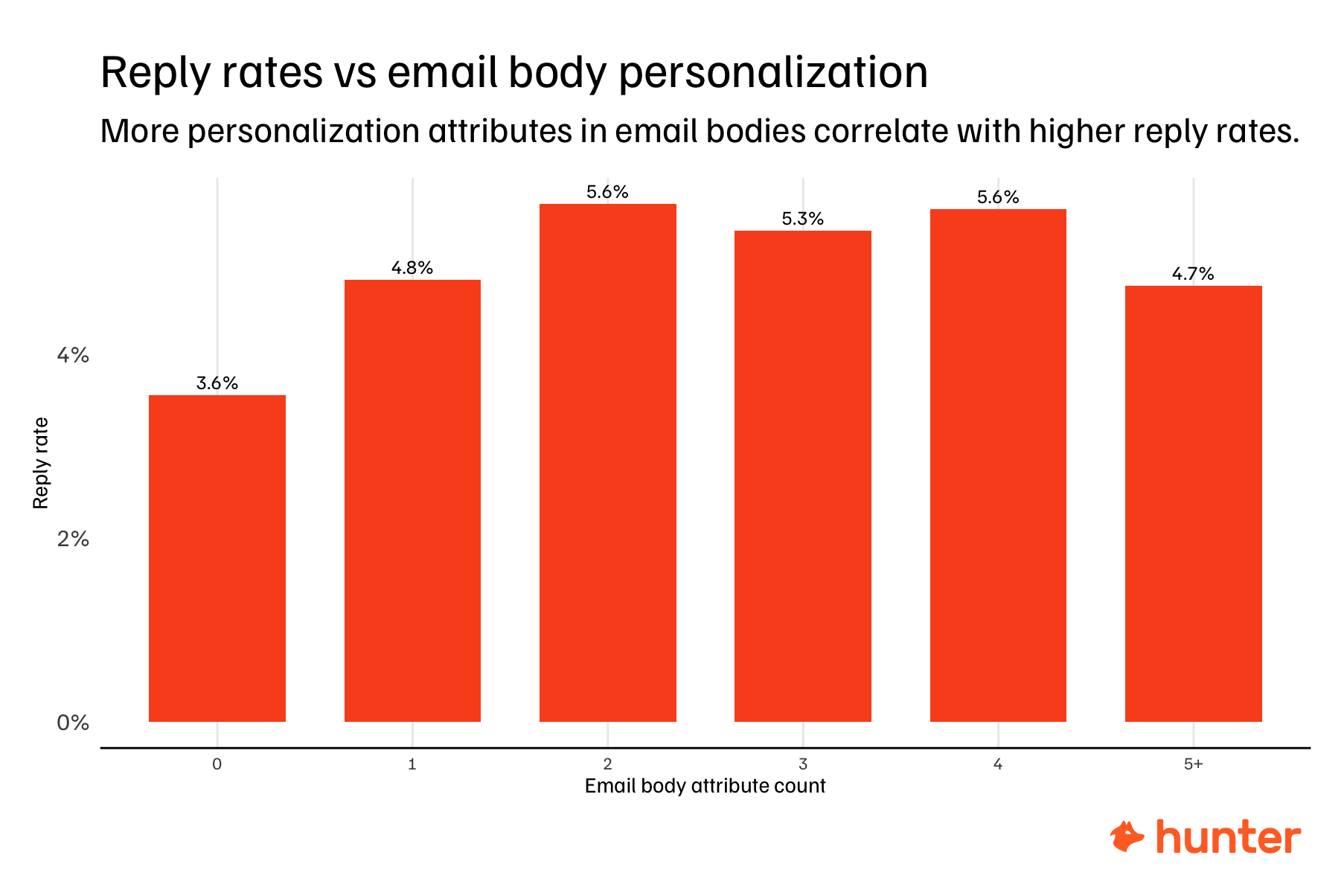
Subject lines with two custom attributes achieve a +14% higher open rate than those with one (40.2% vs 35.4%). Emails with two custom attributes see a +56% higher reply rate than non-personalized emails (5.6% vs 3.6%).
Manually edit emails when it matters
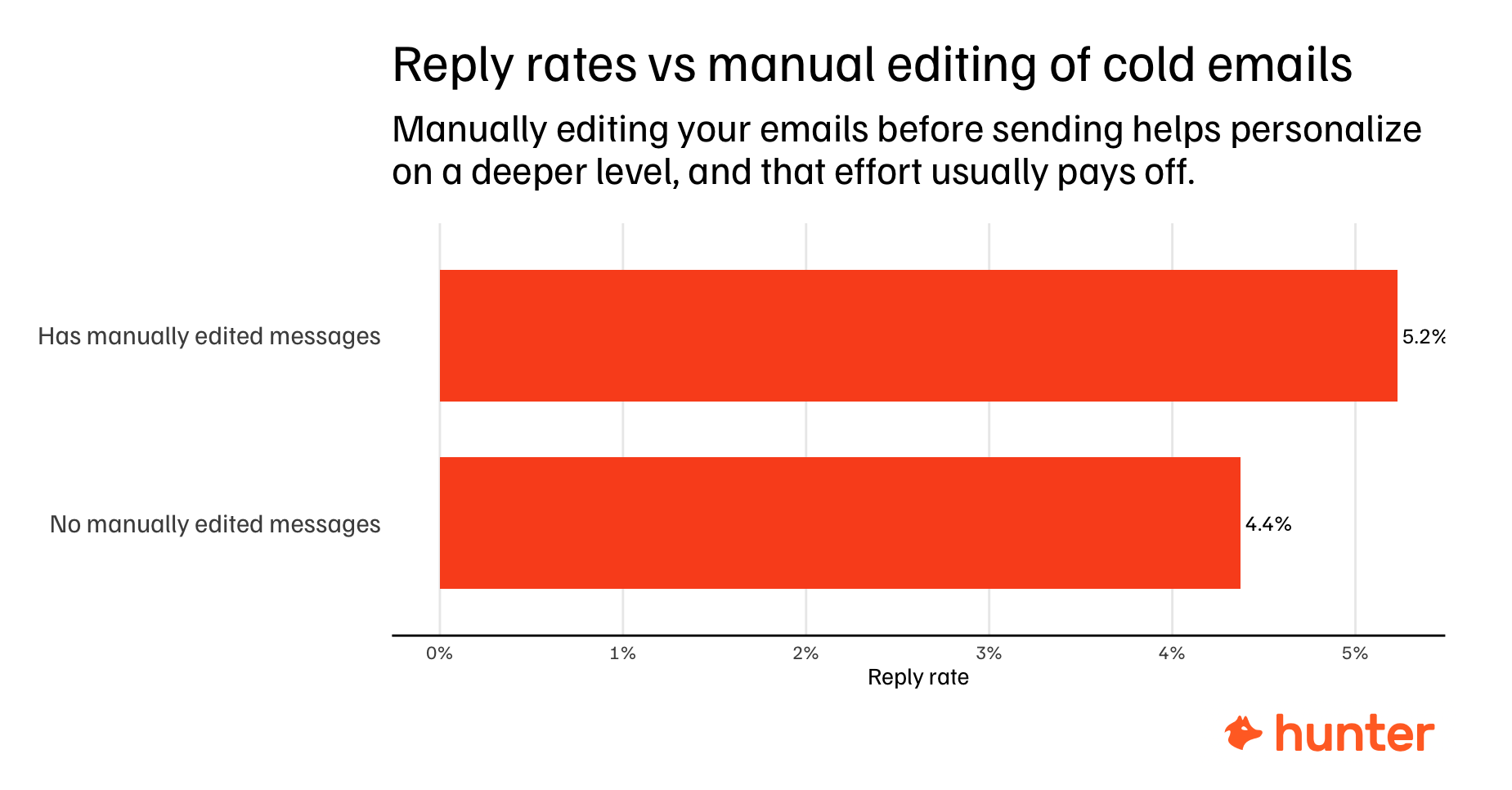
Manually edited emails outperform fully automated ones by +18% in reply rate (5.2% vs 4.4%).
AI-assisted emails must feel human
Emails that sound templated or synthetic face resistance—69% of decision makers say it bothers them if AI was used, unless the output feels genuinely human.
Avoid pushy, sales-first copy, and stay relevant
Over-aggressive messaging is now the top complaint—65% say cold emails fail because they feel too sales-focused, overtaking lack of relevance as the #1 issue. As the second most pressing issue, 61% of decision makers cite irrelevance as a reason cold emails fail.
Cold email competes with LinkedIn for attention
LinkedIn is now the preferred outreach channel for 50.5% of decision makers, compared to 25% for email—raising the bar for email to justify its interruption. This is a change compared to last year.
Value is rare—but recognized when delivered
Although 28% of surveyed decision makers say they never receive valuable cold emails, 58% receive something useful at least monthly, showing strong upside for well-executed outreach.
Start with low-pressure CTAs
Open-ended CTAs outperform hard asks: "Can I send more info?" and "Open to learning more?" are preferred by decision makers over scheduling a meeting upfront.
Status quo
The average cold email sequence reply rate is 4.5%—for every 1000 recipients that received a cold email in 2025, only 45 replied.
Critically though, reply rates vary by use case:
- Are you in sales? Sales outreach sequences get a 3% average response rate
- Hunting for MQLs or engaging existing users? Marketing-focused campaigns get a 6.2% average response rate
- Building links for SEO? Digital PR gets a 13% average response rate
- Are you in HR? Headhunting campaigns get a 7.5% average response rate
The average open rate sits at 30%. This is lower than what you should aim for and reflects deliverability issues caused by Gmail and Outlook tightening their spam filters.
The average unsubscribe rate is 1.6%. Unsubscribes help measure how relevant your email is to the recipient.
The average bounce rate is 3.6%. Bounces are typically caused by unverified contact information, but can also stem from low sender reputation or aggressive sending rates.
"A 3.6% average bounce rate is a sign of broken workflows. In every outbound system I've rebuilt, the biggest lift didn't come from better copy, but from fixing validation: layering multiple enrichment sources, filtering catch-alls, and controlling send velocity.
If your bounce rate is above 2%, you're damaging your domain and killing future pipeline."
Despite low reply rates, the majority of decision makers are still open to email outreach. While 33% say they haven't replied to any cold emails in the past year, 32% report replying to five or more. Cold email is not "dead", but it is increasingly polarized between campaigns that feel relevant and those that don't.
"Micro campaigns are the future. Spray and pray fails because it requires you to dilute your messaging to appeal to everyone. Appealing to everyone means appealing to no one."
How to send a cold email
How many people should you target at once?
In 2025, the average sequence had 449 recipients.
That's too many. A marketing director at a UK-based marketing platform says, "People ought to look more at who they're sending emails to rather than scaling at the cost of relevancy."
Our data indicates that the best sequences targeted between 21-50 recipients, achieving a 6.2% reply rate. Contrast this to 2.4% for sequences with over 500 recipients, and you understand that relevance is indeed harder to maintain at scale.
"The reason 21–50 recipient lists outperform 500+ by 2.5x isn't magic. It's that when your list is that tight, you're forced to actually know who you're writing to. Narrow the list and the copy writes itself."
This matters even more given recipient sentiment: 61% of decision makers say cold emails 'suck' because they aren't relevant—and 48% explicitly call out generic, impersonal messaging.
Takeaway: This may be counterintuitive—most senders have thousands, not dozens, of companies they want to target with their outreach. We're not saying you should limit yourself to achieve a high reply rate.
Instead, you should cut your audience into smaller segments so your messaging is always as relevant as possible. And scale that. Segment your audience on demographic and firmographic variables, aiming for segments of 50 or fewer recipients. Prepare bespoke copy for each subsequence. That effort will pay off.
How many emails should you send per day?
You may have the goal of reaching 10 thousand people by the end of next month. But email service providers (ESPs) don't care.
If you send too many emails per day from a single email account, your deliverability will suffer. ESPs expect a sending volume that reflects what a human could reasonably send in a day's work.
Reply rates peak at 5.7% for campaigns that send between 20-49 emails per day, and are at similar levels for sequences sending between 50-99 emails per day per sender account. Open rates are also highest when you stay below 100 emails per account.
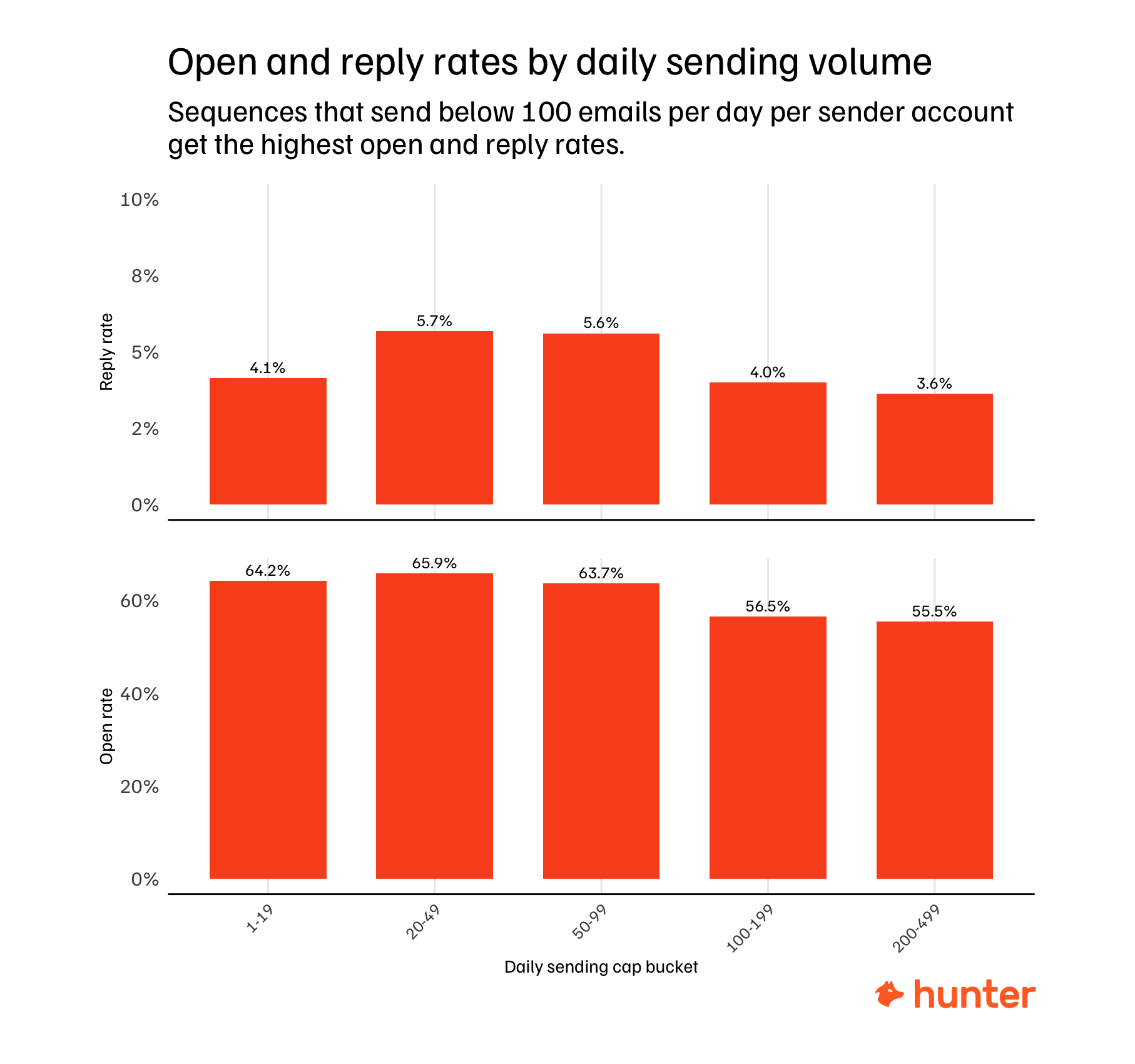
Takeaway: Human-like sending volumes protect deliverability; aggressive daily limits erode both open and reply rates.
Can you use a freemail account for cold email?
Sending from freemail halves your potential reply rate. This is both because ESPs may apply harsher spam filters to messages coming from freemail accounts, and because using a custom domain makes your emails look more trustworthy and professional.
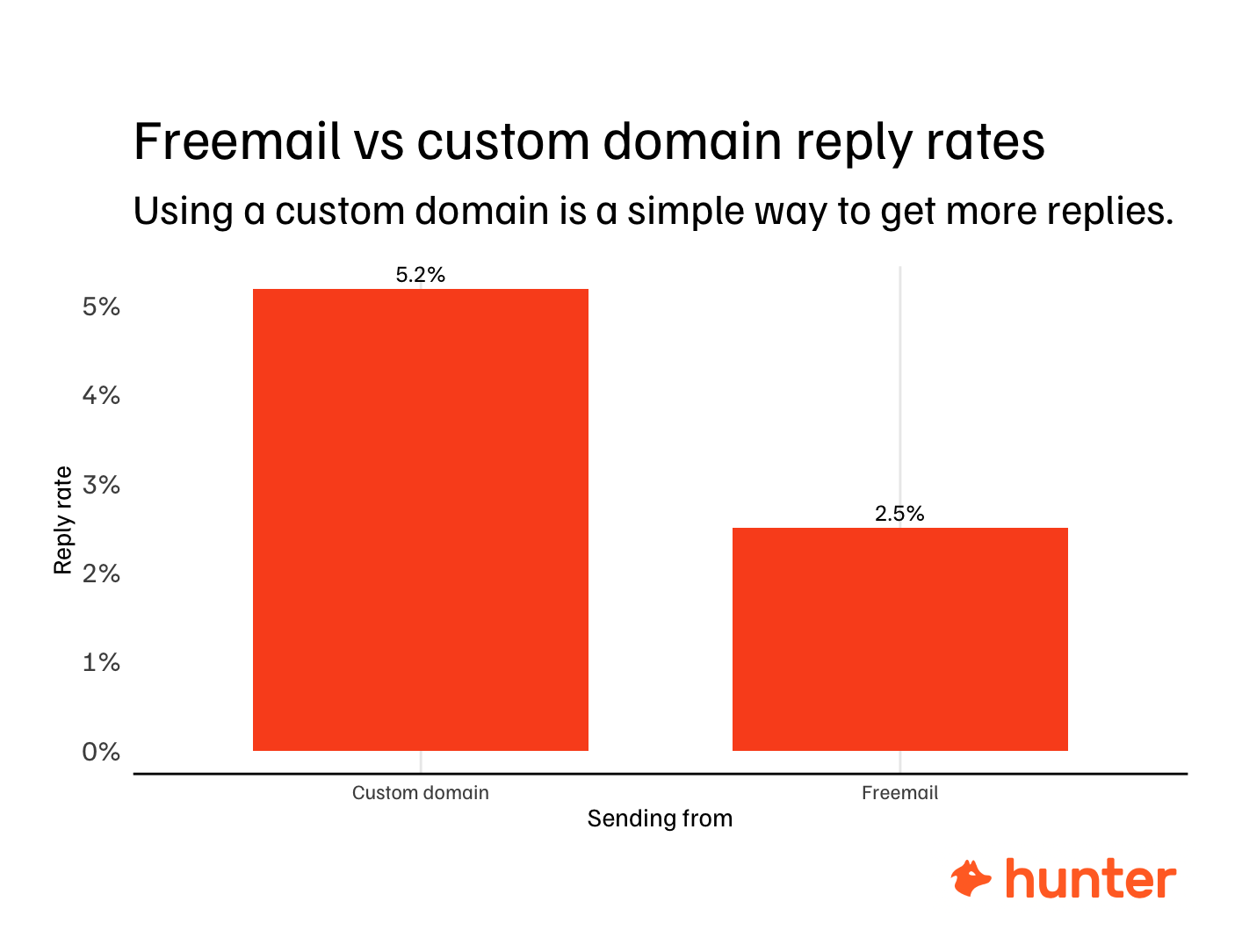
Takeaway: Freemail addresses impose a credibility and deliverability penalty—custom domains are table stakes. Spending a couple of dollars per month can effectively double your replies.
What's the best email service provider for cold email?
Alright, you shouldn't use a freemail inbox. But which ESP should you then pay for a custom one?
Our data says Google Workspace users hit the highest average reply rates (5.9%). Microsoft 365 is significantly less effective at just over 4%.
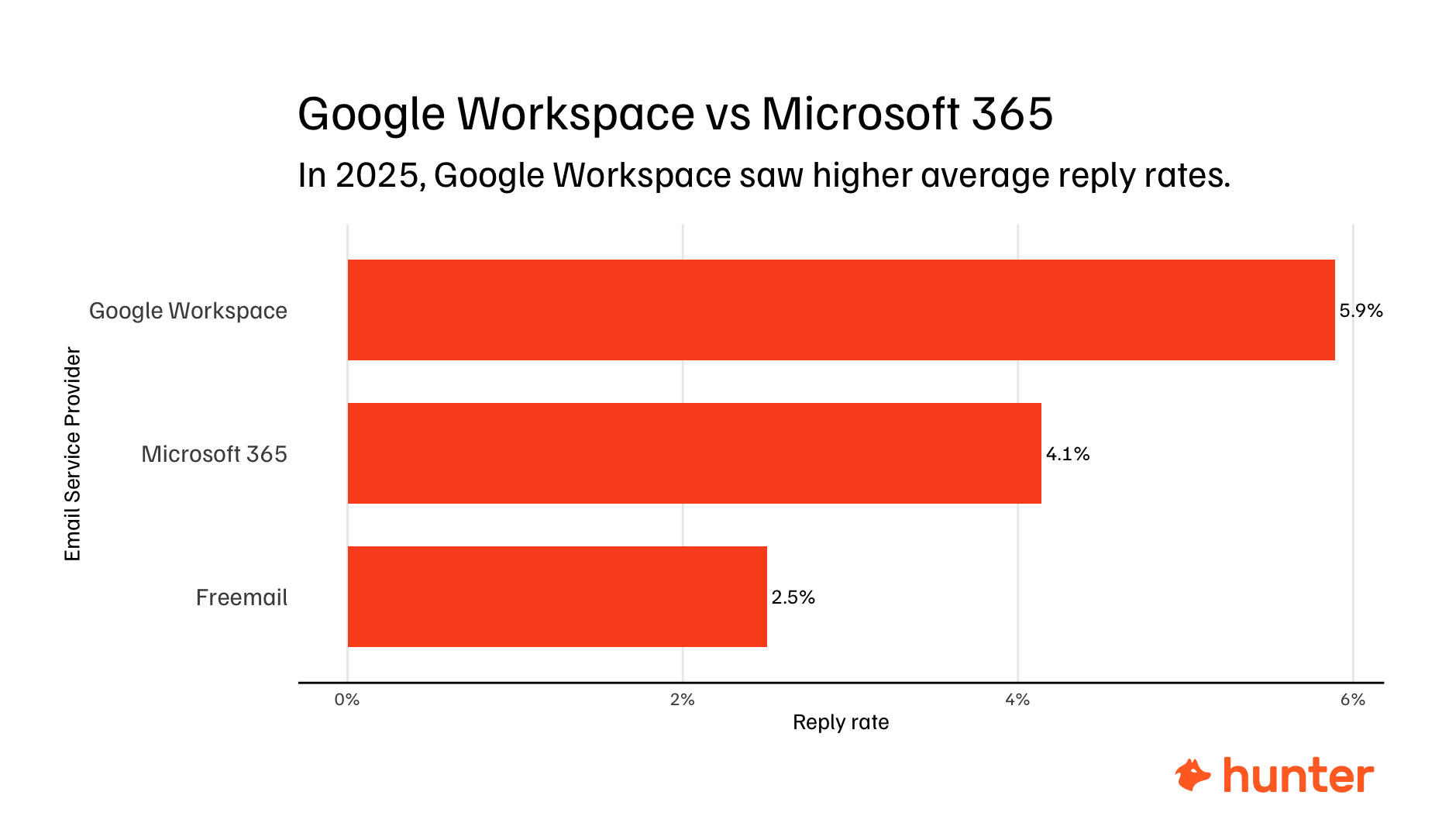
"Google has been our best performer across the majority of our campaigns. Diversifying your infrastructure between Google and Outlook is typically smart, but it also comes down to your target market. If you're only reaching out to enterprise companies, Outlook mailboxes that have warmed up for a longer period tend to perform better. Reaching local service contractors? You should be relatively safe with Google.
But then again, you're playing a risk by having all eggs in one basket. If Google comes out with an update or burns a large batch of your admin panels, you're in trouble."
How many people should you contact per company?
Choosing the best person to contact isn't always easy, but it's a worthwhile effort. Emailing one person per company yields a higher reply rate than reaching out to multiple people per company. This is because you're more precise with your targeting, and because sending multiple similar emails to a single domain can look spammy to the recipient's email server.
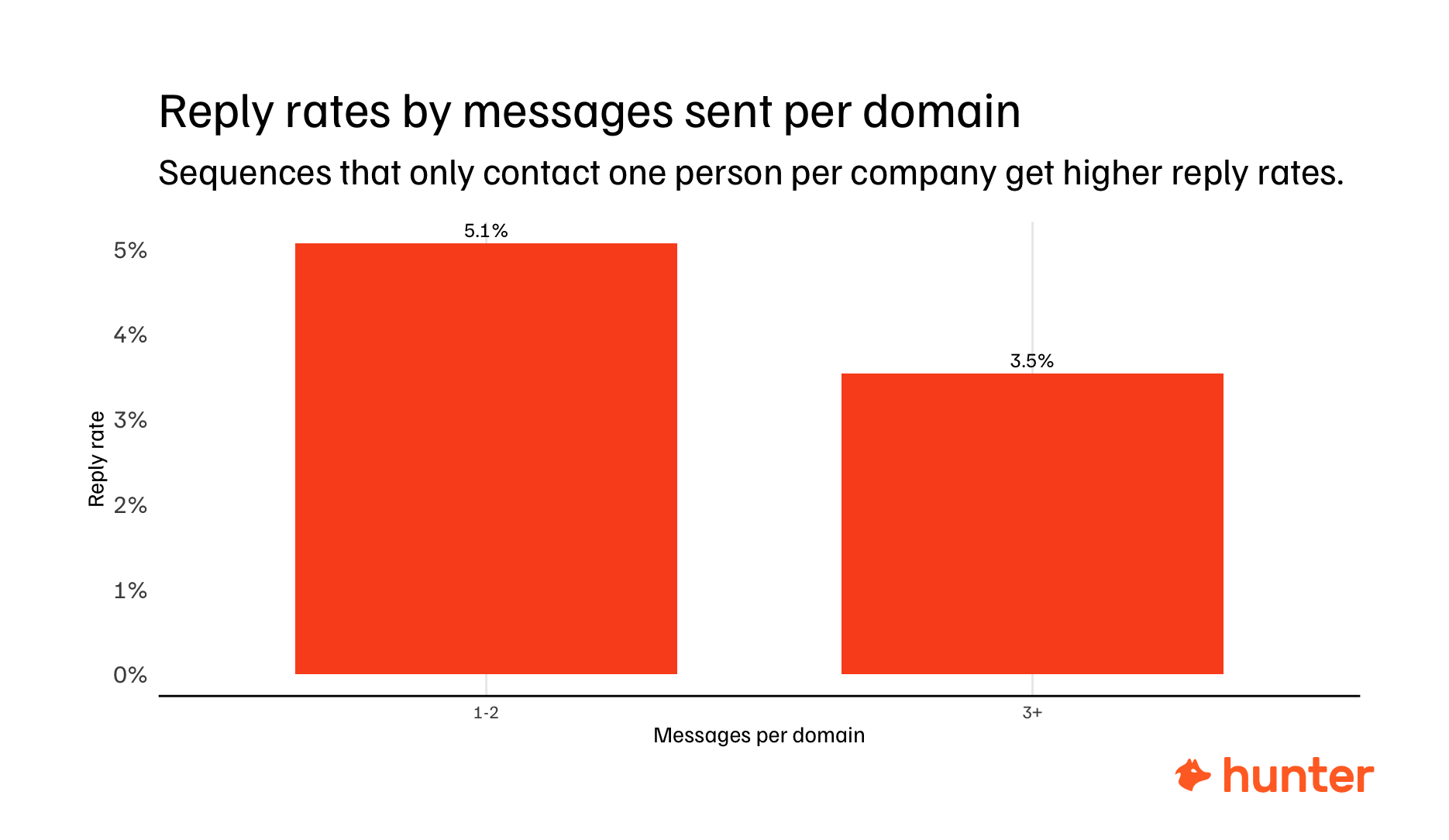
Takeaway: Choosing one well-matched contact per company beats contacting multiple people and reduces spam signals at the domain level.
Should you track email opens?
Sequences with email tracking enabled had a significantly lower reply rate: 4.4% compared to 7.4% without tracking. So don't track your sequence open rate and link clicks unless you absolutely need to.
"We stopped tracking open rates 3 years ago. Apple's Mail Privacy update auto-fires tracking pixels. Corporate security filters prefetch emails for malware checks. At scale, open rate data is fiction. The only metric that matters is manual reply rate.
If you want to know whether you're actually inboxing, watch your out-of-office replies. You only get OOO replies from the primary inbox. When those drop, you're going to spam—usually 48 to 72 hours before it fully tanks."
Takeaway: Email tracking materially hurts reply rates; unless you truly need diagnostics (open rate does help test your subject lines, and it's a lagging indicator of deliverability), leaving tracking off improves outcomes.
Should you send follow-up cold emails?
Sending just one email limits your potential reply rate.
The best sequences use a total of three messages. On the flip side, those who follow up three or more times have a lower average reply rate.
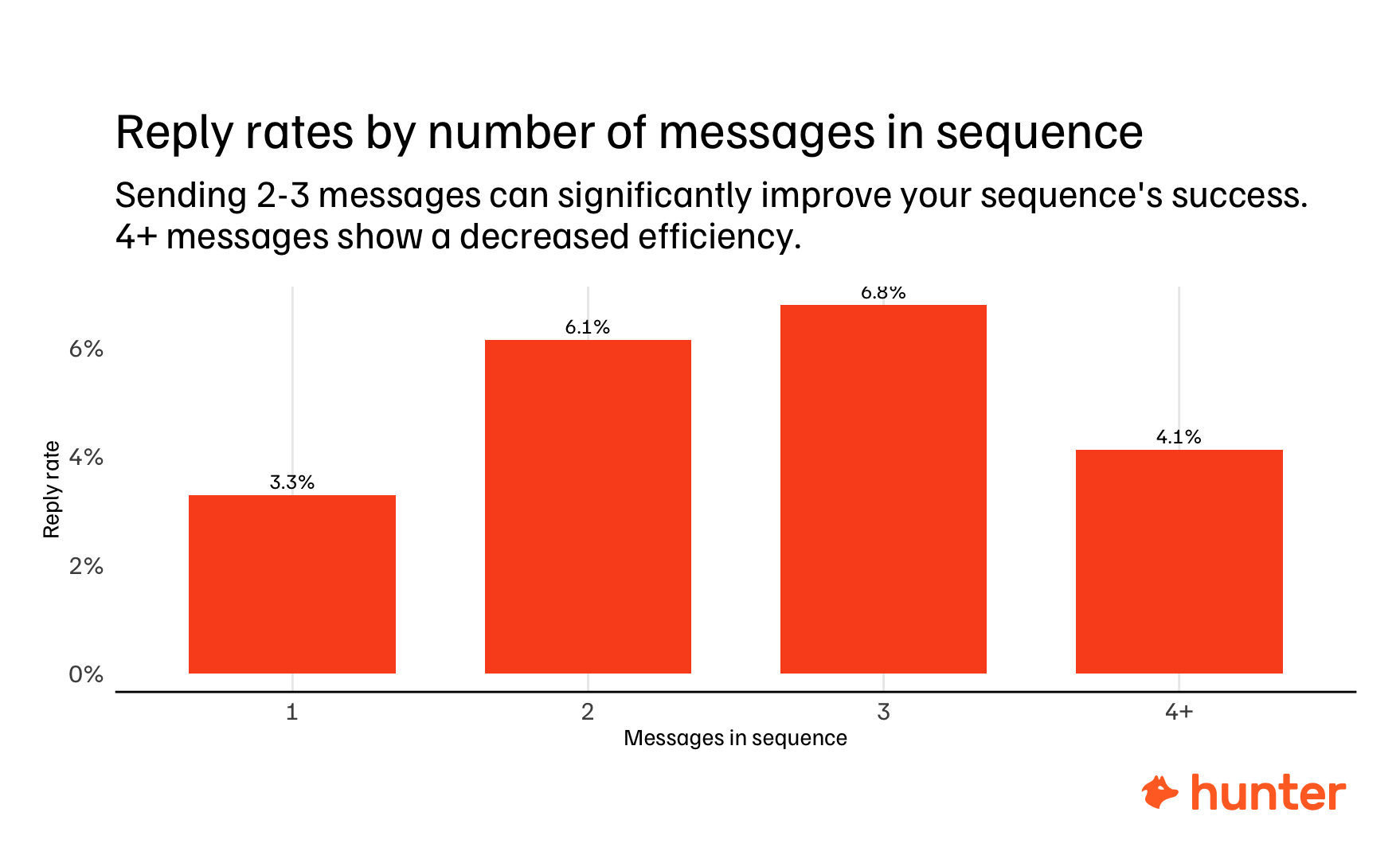
While it's your initial message that will generate most replies (2.9%), following up twice nearly doubles the average reply rate.
Interestingly, last year's analysis showed that reply rates peaked at four messages per sequence. Recipients aren't as willing to entertain long sequences anymore, and it's really the first couple of messages that are your opportunity to generate a "yes".
Takeaway: Follow-ups compound results, but only up to a point—three total emails is the optimal balance between persistence and fatigue.
Writing cold emails
How long should your subject line be?
It's common to aim for your subject line to be as short as possible. However, data disproves this. 5-6 words is the sweet spot for average reply rates.
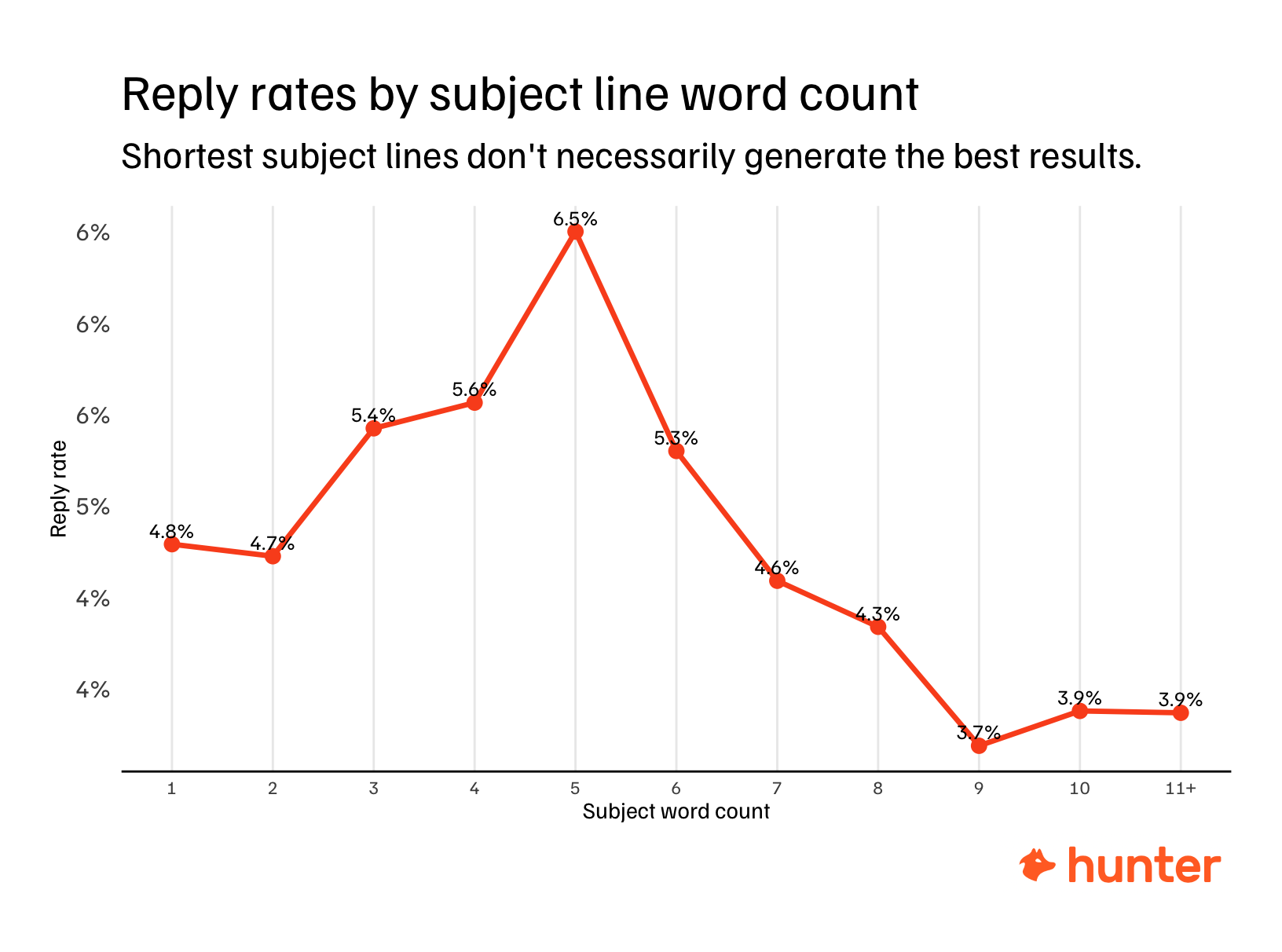
Takeaway: Extremely short subject lines are not optimal; moderate length provides enough context to signal relevance.
Should you say "Quick question" in your subject line?
"Quick question, {name}" or "Quick question about {company}" are simple subject line templates that some experts swear by.
When asked about the strategies that worked best for them in 2025, a senior US-based salesperson working in the real estate industry said, "A 'Quick question' subject line has worked best for us. No name and company name in the subject line."
That said, our analysis shows that subject lines matching this pattern actually underperform at a 2.5% reply rate and 28.7% open rate, compared to 2.9% and 32.9% for other subject lines.
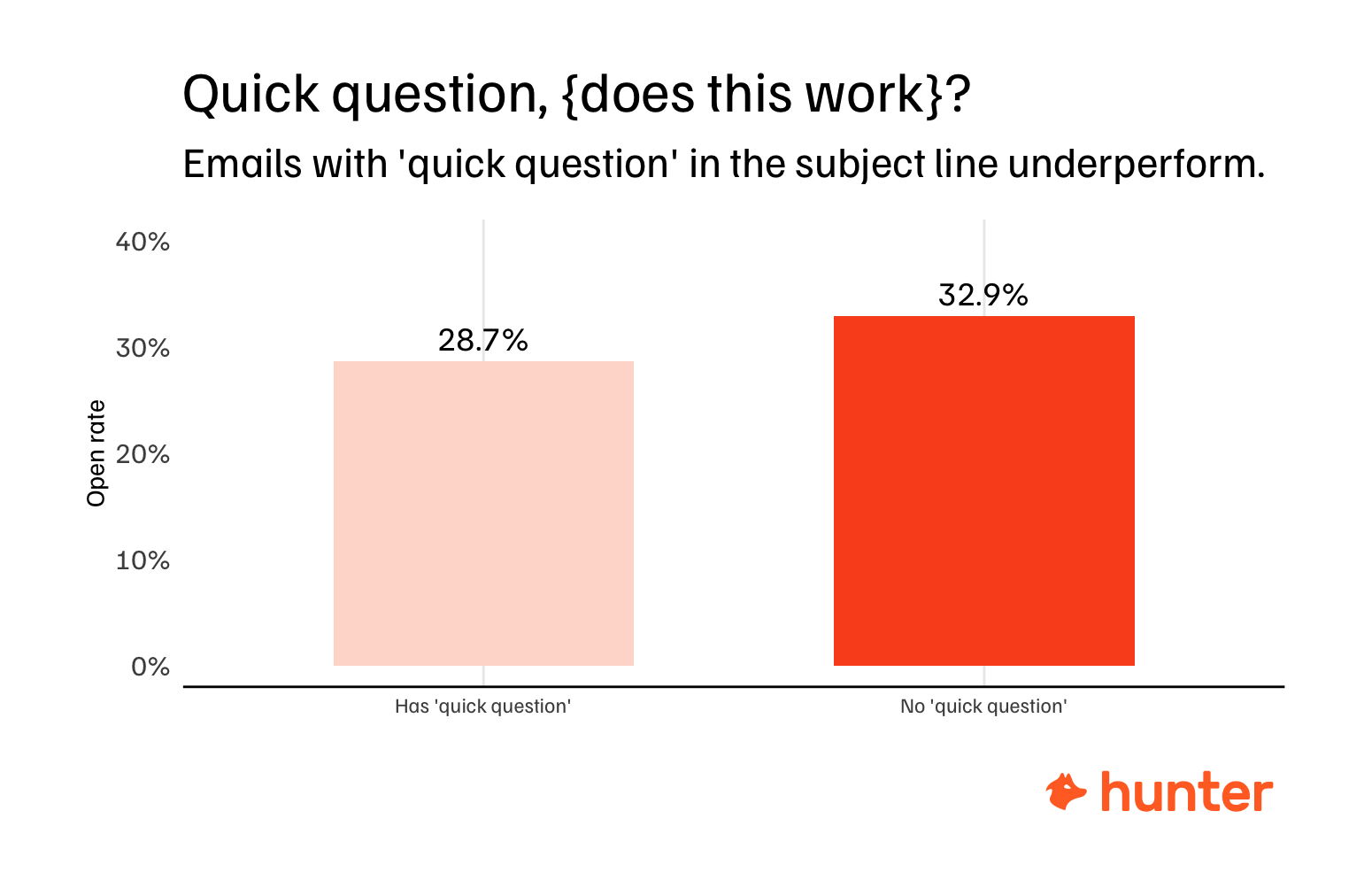
Takeaway: Overused subject line patterns may underperform, likely due to recipient fatigue and spam filtering heuristics—although this highly depends on your industry.
Should you personalize your subject lines?
Making your subject line look relevant is critical to getting your emails opened.
Hunter users commonly add the recipient's first name or their company's name to the subject line to apply a basic level of personalization. This simple practice positively reflects on their open rates.
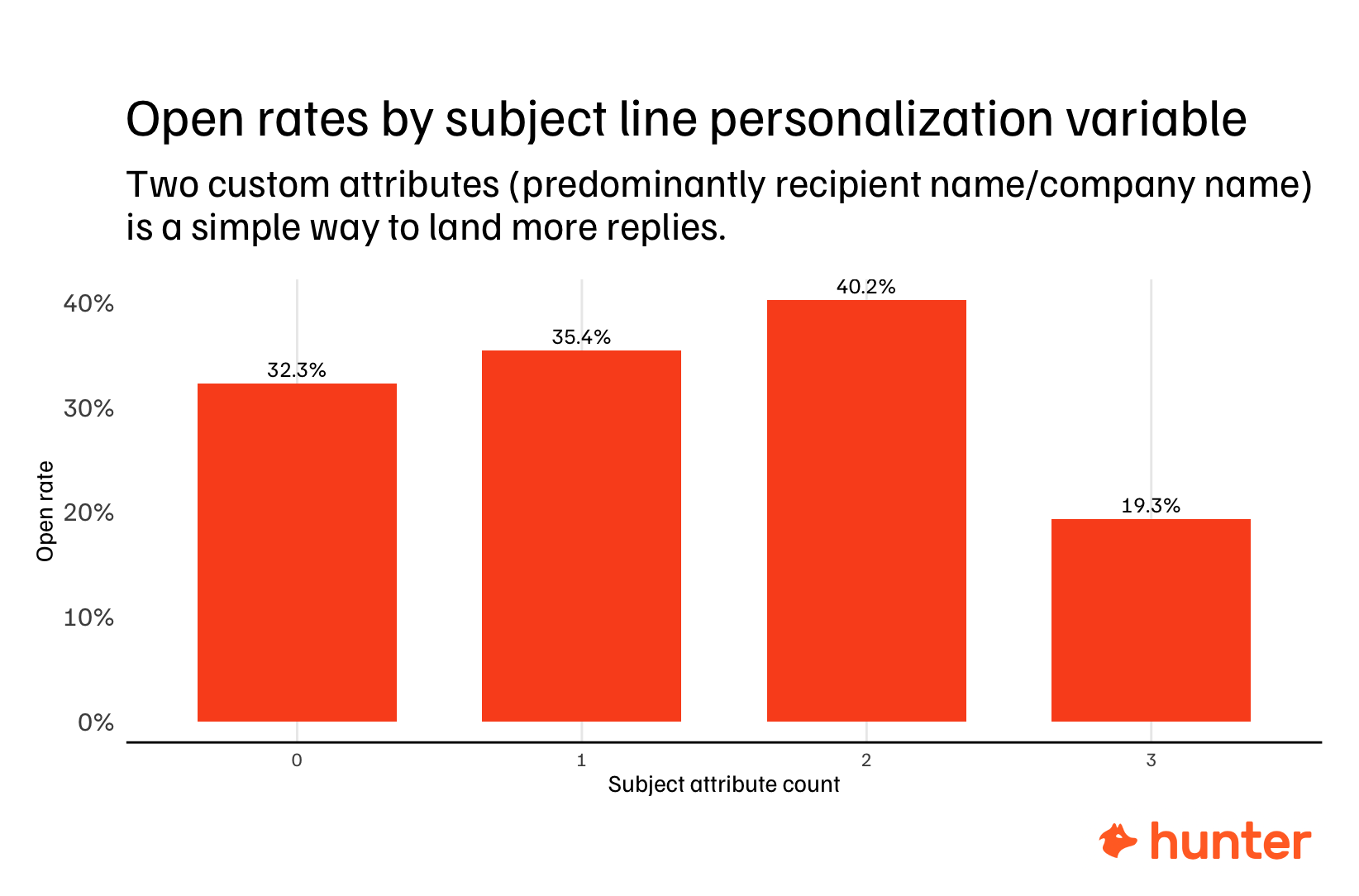
Data shows increased open rates for subject lines with one (35.4% avg open rate) or, ideally, two (40.2% avg open rate) custom attributes.
Takeaway: Subject line personalization meaningfully increases opens, especially when multiple attributes reinforce relevance.
How long should your actual email be?
Now, this is a topic that often evokes strong feelings. The advice is often to keep your email as short as possible.
At the same time, a founder of a UK-based IT consultancy says, "Transactional emails seem dead. Now, it's about demonstrating expertise and relationship-building."
And it's not easy to demonstrate expertise within a 20-word email.
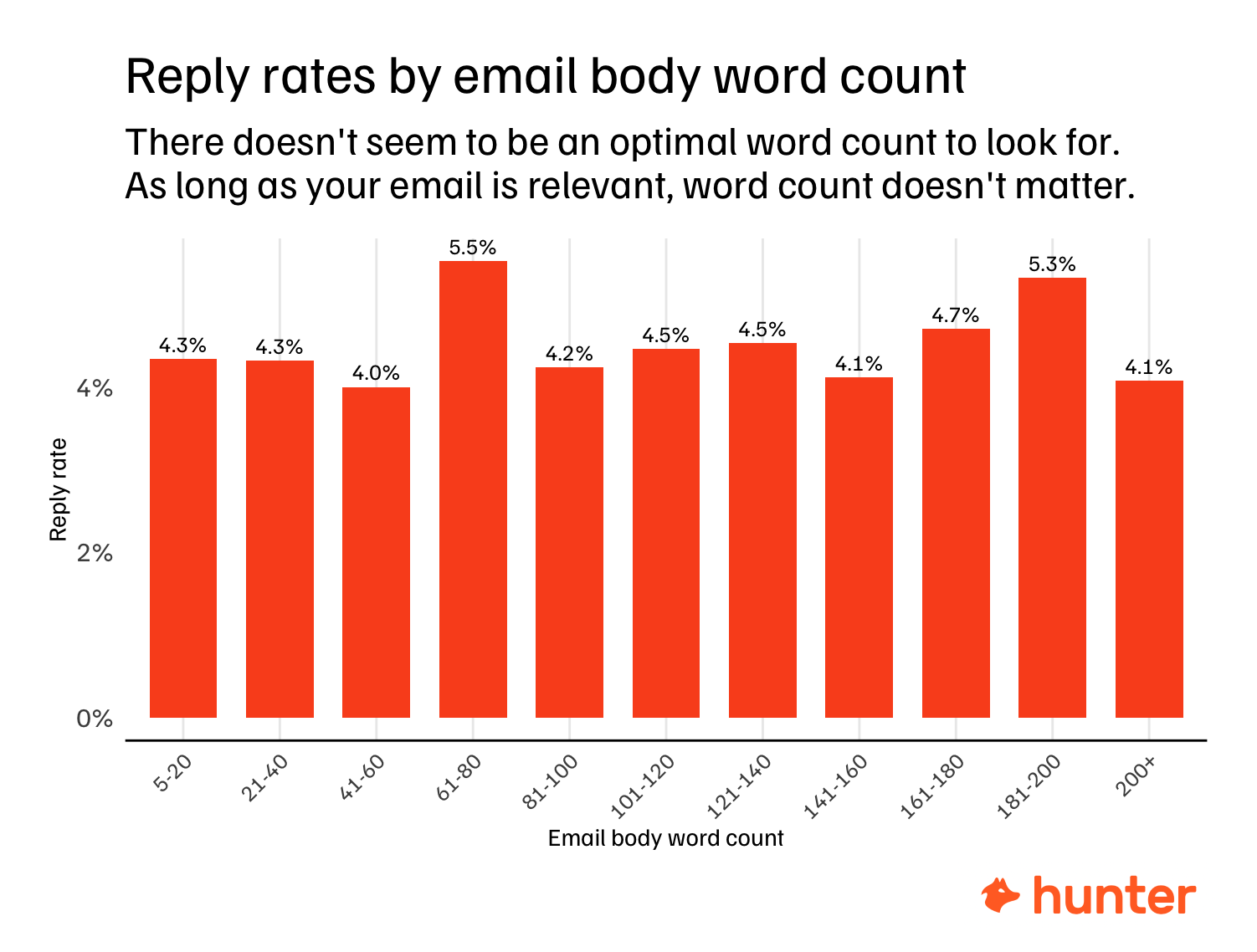
Our data tells a complicated story. Emails of 61-80 words get comparatively high reply rates, but so do those of 181-200 words.
"Certain prospects are less receptive to short quippy emails and will respond better to a longer one. However, even for long copy, use line breaks effectively to maintain visual hygiene. And be pithy. A long email does not mean a bloated one. Every sentence should still be there for a specific reason."
Takeaway: Don't waste your recipient's time with irrelevant copy, but do use the opportunity to properly explain your value proposition.
Should you personalize your email body?
A PR Director at a real estate firm says, "Mass emails don't work nearly as well as they used to. Emails need to be genuinely customized to the person."
Just like with subject lines, personalizing your email body boosts reply rates.
Sequences with no personalization show an average reply rate of 3.6%, compared to 5.6% if your email body has two custom attributes.
Furthermore, senders who go the extra mile and manually edit some emails in their campaigns before hitting "Send" see an additional boost to average reply rates.
"We've found that personalization in email copy can actually backfire when it feels artificial. Prospects care more if an email looks genuine and human rather than personalized. It's important to be cautious when using AI to do this. When it lacks authenticity, it can do more harm than good and lead to negative responses."
This aligns closely with recipient expectations: 67% of decision makers say personalization using publicly available information makes them more likely to reply.
Takeaway: Thoughtful personalization in the body significantly improves reply rates. Use custom attributes as a quick win, and manually edit emails to select recipients to maximize conversions.
What decision makers say about cold email
Decision makers aren't rejecting cold email outright—but their tolerance is thinner than it used to be.
"As someone who has been using AI-personalized emails for years, it's important to understand that people are tired of bad AI. When using AI, it needs to be relevant, necessary, and consistent with your intended message."
The strongest signal from our survey is sensitivity to how emails are written. 69% of US-based decision makers say it bothers them if AI was used to write the email, which suggests that while AI is now commonplace on the sender side, recipients are quick to disengage when messages feel templated, synthetic, or overly polished.
This shows AI fatigue as previous surveys we ran on this topic showed a higher willingness to interact with AI-assisted outreach.
"Most operators point AI at the copy. That's why 69% of decision makers are sick of AI-written emails. Invert it: AI qualifies accounts and job titles, humans write the words. That's how you run quality at scale."
Relevance still matters, but it's no longer the only problem. 61% cite lack of relevance as a reason cold emails fail, yet an even larger share—65%—say emails feel too pushy or sales-focused, making this the top complaint this year. Compared to last year, frustration has shifted from "this isn't for me" to "this is trying too hard to sell me something."
At the same time, cold email is no longer competing in a vacuum. LinkedIn has overtaken email as the preferred outreach channel (50.5% vs 25%), which raises the bar: email now has to earn attention in an inbox that already feels like the second choice.
"We're seeing email remains core to GTM teams' growth strategy. Everyone has an email address, after all! But teams are increasingly adding channels to find the best way to reach each person. This includes multiple social networks like X, phones, even direct mail, and more."
And yet, the upside remains real. While 28% say they never receive valuable cold emails, a much larger group does—40% receive something useful about once a week, and another 18% about once a month. In other words, most decision makers do recognize value when it shows up—they just see it far less often than they'd like.
What doesn't seem to matter
We looked at several other variables you might care about, but for many of them we didn't find a meaningful effect on reply rates.
Here are factors that didn't move the needle in our data:
- Using images and attachments in your emails
- Using emojis in the email body or subject line
- Sending on a specific day of the week
You can still use these elements for tone or clarity—just don't expect them to move reply rates on their own.